Get Answers for Peritoneal Mesothelioma Cancer
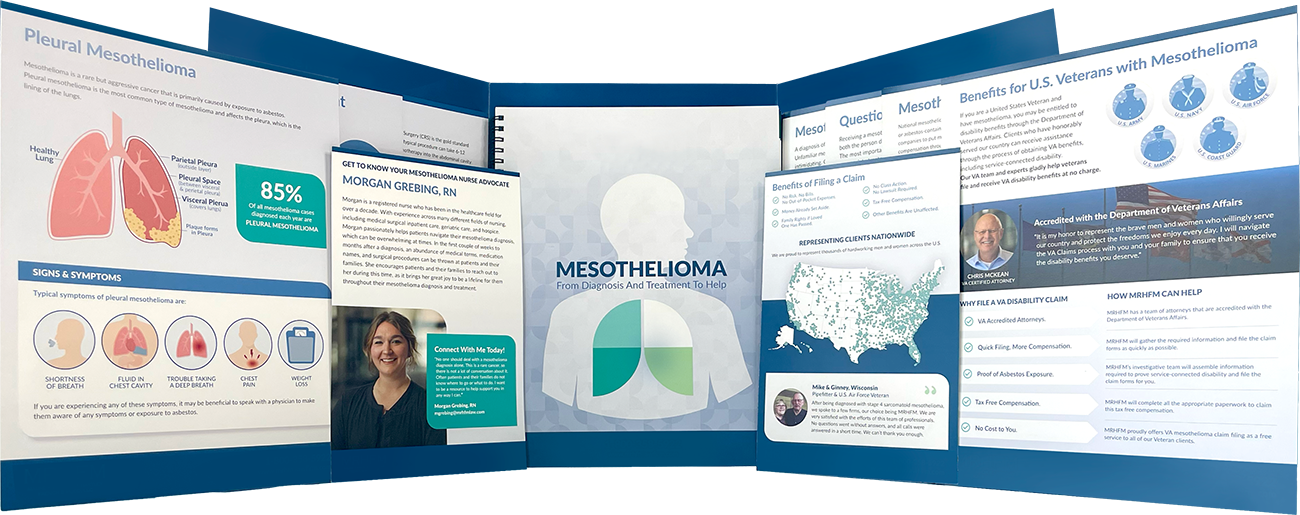
The Trusted Guide Survivors and Families Wish They’d Had After Diagnosis:
- What Your Diagnosis Means
- Advice from 101 Cancer Caregivers
- Treatment Options Explained
- What Survivors Did Differently
Answer 3 quick questions and we’ll ship your free Mesothelioma Kit today:
Answer 3 quick questions and we’ll ship your free Mesothelioma Kit today:
Thank You!

We will send you your free guide shortly.
 Your information will be kept private
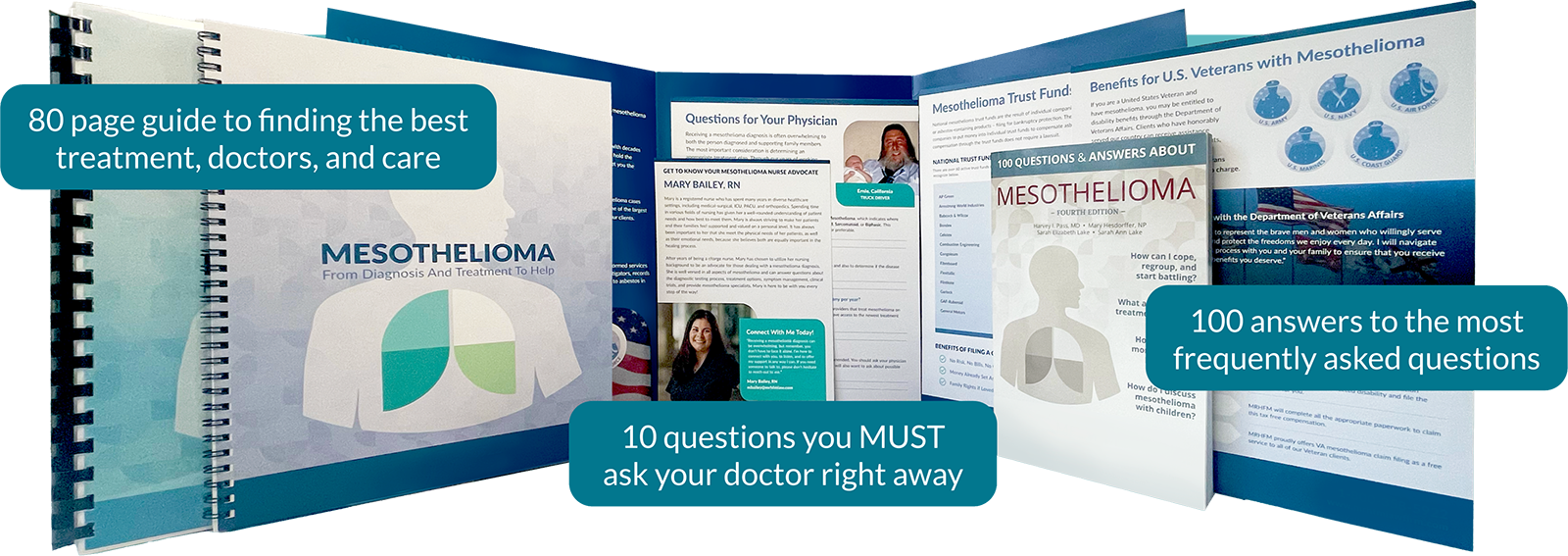
Your FREE Mesothelioma Care Kit Includes:
- 80-page guide to finding the best treatment, doctors, and care
- 100 answers to the most frequently asked questions
- 10 questions you MUST ask your doctor right away
- Best-selling cookbook: Cancer-Fighting Kitchen:
$32.50 - Award-winning book: Things I Wish I’d Known:
$19.95

The kit we received on mesothelioma is excellent and very well put together. We knew nothing about mesothelioma and this was the greatest resource we could get.

Hubert,
Pleural Mesothelioma
Patient in Massachusetts

Our Mesothelioma Care Kit provides the latest information on top treatment options and ways others have improved life expectancy.
Symptoms of Peritoneal Mesothelioma
Peritoneal mesothelioma is marked by two main symptoms: the buildup of fluid in the abdominal cavity (ascites) and the thickening of the lining of the abdomen (peritoneal thickening). As a patient’s mesothelioma advances, ascites and peritoneal thickening put more pressure on the internal organs in the abdominal cavity. Peritoneal mesothelioma symptoms include:
- Buildup of fluid in the abdomen (ascites)
- Weight loss
- Loss of appetite
- Abdominal pain
- Seizures (less common)
- Buildup of gas
Peritoneal Mesothelioma
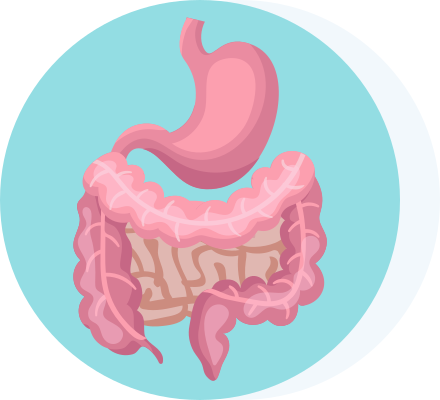
Peritoneal mesothelioma affects the lining of the abdomen (peritoneum) and makes up about 20 percent of all mesothelioma cases. Peritoneal mesothelioma is caused by inhaling or ingesting microscopic asbestos fibers that then get embedded in the peritoneum. Over time, typically two decades or more, the embedded fibers cause mutations in the surrounding healthy mesothelial cells. The constant genetic damage from the mutation turns the cells cancerous and forms tumors on the peritoneum.
What does your diagnosis mean?
There is no standard staging system for peritoneal mesothelioma, so doctors classify the disease as either localized or advanced. Localized means the cancer has stayed in the same area where it was first discovered. Advanced means the cancer has grown and spread to other parts of the body. In general, localized mesothelioma can handle more aggressive treatments.
Which treatments work?
Cytoreduction with HIPEC, a procedure which removes tumors from the abdomen and treats the affected area with heated chemotherapy, often offers the best chance for long-term survival. Even though it’s the most effective form of treatment, 60% of patients are not eligible to receive it. Those patients have to rely on chemotherapy alone as their course of treatment.
More on Mesothelioma Treatment
What’s the prognosis for this disease?
Thanks to procedures like HIPEC, peritoneal mesothelioma patients tend to live longer than those diagnosed with either pleural or pericardial mesothelioma, sometimes even reaching beyond 5 years.
More about Mesothelioma Prognosis
Treatments for Peritoneal Mesothelioma
Cytoreductive surgery with heated intraperitoneal chemotherapy (HIPEC) is the most effective treatment for patients diagnosed with peritoneal mesothelioma. However, because 60% of patients are not eligible for HIPEC, chemotherapy is the most commonly received treatment.
HIPEC is an example of a multimodal therapy where multiple treatments are combined to provide more effective treatment. The addition of HIPEC to cytoreductive surgery has led to significant leaps in life expectancy for peritoneal mesothelioma patients.
Cytoreductive Surgery
Cytoreductive surgery removes any visible sign of mesothelioma tumors that are in and around the abdominal cavity. The procedure itself takes up to 10 hours to complete, is highly complex, and may also involve the removal of nonessential organs affected by mesothelioma.
Heated Intraperitoneal Chemotherapy (HIPEC)
Shortly after the cytoreductive surgery is completed, HIPEC introduces a heated mixture of chemotherapy drugs into the abdominal cavity, killing any microscopic traces of mesothelioma that may remain.
Typically heated to a temperature of 104 – 107 degrees, the mixture of drugs is circulated inside the abdominal cavity for a maximum up to 2 hours. This allows the chemotherapy enough time to be absorbed into the microscopic cancer cells and increases the cancer-killing effectiveness of the drugs.
HIPEC may be given once, shortly after the surgical procedure, or as many times as the surgeon sees fit in the weeks following the surgery. One study from 2014 reported that patients who receive repeated HIPEC after a single cytoreductive surgery experienced a longer average survival time (approximately 80 months) than those who only received it once (27.2 months), with some patients living significantly longer.
Paracentesis
A paracentesis uses a needle or catheter to remove the buildup of fluid in the abdominal cavity. It’s highly effective in relieving discomfort and pain caused by symptoms of peritoneal mesothelioma.
The Prognosis for Peritoneal Mesothelioma
Peritoneal mesothelioma patients typically have a more favorable prognosis than those with other forms of the disease.
Peritoneal mesothelioma patients tend to have an average life expectancy of about 12 months. But patients who have cytoreduction with HIPEC often experience significantly longer survival times — from 5 to 7 years, with some patients living even longer. Additionally, most medical centers typically report a median survival rate ranging from 30 to 90 months after a cytoreduction with HIPEC.
There are other factors specific to each patient that can also impact their prognosis. These factors include:
- Age
- Overall health
- Cancer stage
- Mesothelioma cell type
If you’ve been diagnosed with peritoneal mesothelioma, there’s still hope. And there are some proven steps you can take to beat your prognosis. Living a healthy lifestyle, including eating healthy foods and getting plenty of exercise, can improve your overall health. Healthier people have stronger immune systems that can help fight mesothelioma.
Above all else, make sure you get treatment from an experienced mesothelioma specialist. A specialist can select the most effective course of treatment for your specific cancer stage and mesothelioma cell type.
Get trusted information on peritoneal mesothelioma and learn how others have beat their prognosis.