Everything You Need to Know About Mesothelioma

The Trusted Guide Survivors and Families Wish They’d Had After Diagnosis:
- What Your Diagnosis Means
- Advice from 101 Cancer Caregivers
- Treatment Options Explained
- What Survivors Did Differently
Answer 3 quick questions and we'll ship your free Mesothelioma Kit today:
Thank You!

We will send you your free guide shortly.
 Your information will be kept private
Your FREE Mesothelioma Care Kit Includes:
- 80-page guide to finding the best treatment, doctors, and care
- 100 answers to the most frequently asked questions
- 10 questions you MUST ask your doctor right away
- Best-selling cookbook: Cancer-Fighting Kitchen:
$32.50 - Award-winning book: Things I Wish I’d Known:
$19.95

The kit we received on mesothelioma is excellent and very well put together. We knew nothing about mesothelioma and this was the greatest resource we could get.

Hubert,
Pleural Mesothelioma
Patient in Massachusetts

Our Mesothelioma Care Kit provides the latest information on top treatment options and ways others have improved life expectancy.
Getting a proper diagnosis
Diagnosing mesothelioma can be difficult for a number of reasons. Symptoms often take a long time to appear, typically 10 to 50 years or more after exposure to asbestos, the symptoms of mesothelioma are common in several other illnesses. Because the symptoms are nonspecific, most patients are diagnosed with the disease at an advanced stage. Once diagnosed, your doctor will have identified one of three types of mesothelioma: pleural, peritoneal or pericardial. Each has its own distinct set of symptoms.
Pleural Mesothelioma

Pleural Mesothelioma affects the protective lining of the lungs, the pleura. It’s the most common location where the disease occurs — about 75 percent of all diagnosed cases are pleural. Those diagnosed with pleural mesothelioma will typically have the most treatment options available.
Peritoneal Mesothelioma

Peritoneal mesothelioma affects the protective lining of the abdominal cavity, the area of your body containing several organs including the stomach, intestines, kidneys, and liver. It’s the second most common location where mesothelioma grows—about 20 to 24 percent of all mesotheliomas occur here.
Pericardial Mesothelioma

Pericardial mesothelioma affects the protective lining of the heart. It’s one of the rarest locations where mesothelioma occurs and accounts for about 1 percent of all cases. Because it’s rare, doctors don’t get to treat many patients with mesothelioma in this location and haven’t had as many chances to create effective treatments.
Testicular Mesothelioma
Testicular Mesothelioma, in the tunica vaginalis — the membrane that surrounds the testes — makes up less than 1 percent of diagnosed cases. It can be diagnosed by the appearance of a lump in the scrotum, swelling of the testicles, and pain in that area. Due to its rarity, physicians have limited experience treating patients with mesothelioma in this location, leading to fewer opportunities to develop effective treatments.
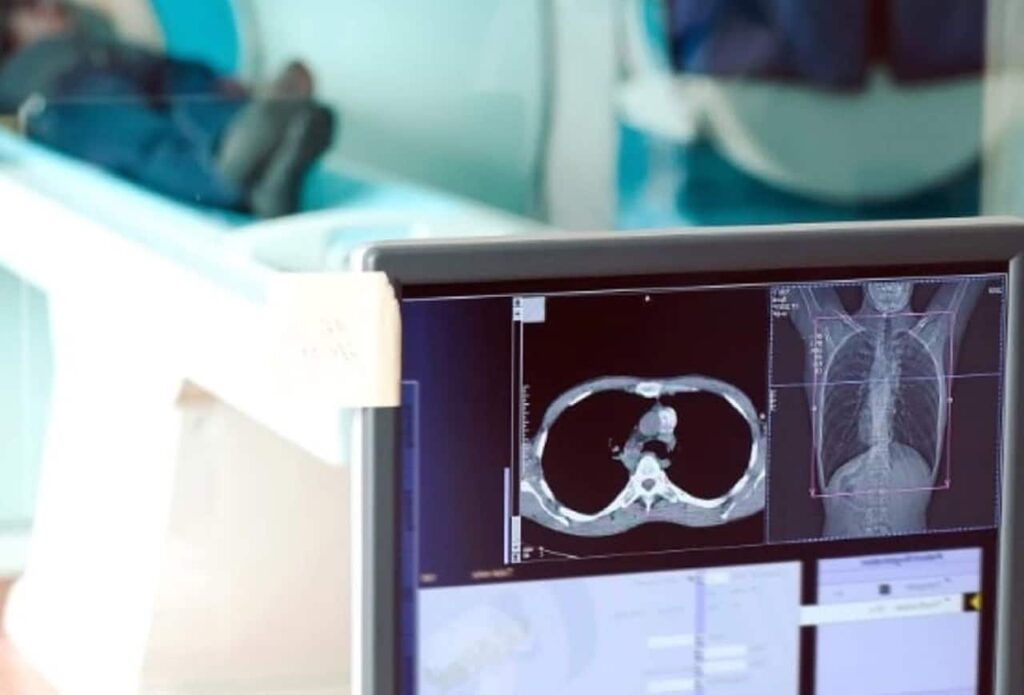

Pleural Mesothelioma accounts for about 75% of all mesothelioma diagnoses.
The 4 Stages of Mesothelioma
Knowing your cancer stage is an important part of your diagnosis because it determines how effective your treatment will be. Although there isn’t a specific staging system for mesothelioma, doctors have used a number of systems — TNM, Butchart, and Brigham — to divide the spread of cancer into 4 stages. For the most part, the earlier the stage, the less mesothelioma has spread, the easier it is for surgeons to remove — and the better your prognosis will be.
Stage 1
- This stage indicates the tumor is only in the mesothelium where it originated and hasn’t yet spread.
- A stage-one mesothelioma diagnosis means a patient should respond well to treatment and should enjoy a better prognosis than patients with more advanced diagnoses.
Stage 2
- At stage two, the tumor has grown larger and may have spread to organs outside the area of where it first appeared in the mesothelium.
- There isn’t a substantial difference in prognosis between stage-one and stage-two patients and curative surgery is still an option.
Stage 3
- At stage three, the tumor has spread throughout one side of a patient’s body and possibly other areas including nearby lymph nodes, the esophagus, the chest wall, ribs, or heart.
- Curative treatments including chemotherapy may no longer be effective at this stage, but surgery may still be an option. Palliative treatment will likely be the best option to improve your quality of life.
Stage 4
- At stage four, the tumor has spread to both sides of the body. It may have invaded the brain, bone cells, far away lymph nodes, and other organ tissues.
- Because it has spread so far, curative treatments such as surgery and chemotherapy are not effective in removing stage four mesothelioma. Doctors will instead use palliative treatment to relieve discomfort caused by symptoms. They may also enroll a patient in a clinical trial where they’ll use new treatments to try and improve a prognosis.
Mesothelioma Treatment Options
Mesothelioma treatment falls into one of two categories: curative or palliative. A mesothelioma specialist will prescribe the optimal treatment option based upon your diagnosis and staging.

Curative Treatment
Curative treatments seek to extend survival time by removing as much of the mesothelioma as possible. Typically multiple curative treatments are combined to achieve better results.
Palliative Treatment
Palliative treatment addresses the symptoms of mesothelioma rather than the cancer itself. By easing symptoms such as chest or abdominal pain, doctors can help improve your quality of life.
Doctors never use a one-size-fits-all approach for mesothelioma treatment because the disease affects each patient so differently. Factors like the cancer stage, cell type, and location of the mesothelioma all play an important role in your treatment and will help determine how your doctor uses treatments like surgery, chemotherapy, or radiation therapy.
Surgery

Surgery is most effective if you’re diagnosed with stage 1 or stage 2 mesothelioma as the disease hasn’t spread far beyond the lining of the lungs, abdomen, or heart. For stage 3 or 4 mesothelioma, doctors use surgery to remove obstructive tumors and improve quality of life.
Chemotherapy

Doctors use chemotherapy to shrink tumors, making their removal with surgery easier and more efficient. They also use it as a palliative measure to shrink tumors that restrict breathing or cause excessive abdominal pain.
Radiation Therapy

Like chemotherapy, radiation therapy helps doctors remove tumors and relieve discomfort caused by their obstructive growth.
Multimodal Therapy

Multimodal therapy is a combination of two or more treatments. Doctors have greatly increased the life expectancy of patients with pleural and peritoneal mesothelioma using multimodal therapy.
Emerging Treatments

Emerging treatments can benefit patients diagnosed with any stage of mesothelioma but may especially improve the prognosis for those with advanced-stage mesothelioma.


You or your loved one might have more treatment options than you think.

Improving Your Prognosis
Your prognosis, an estimate your doctor makes on how your diagnosis will progress based upon how similar diagnoses have affected other people in the past. Factors including the cancer stage, cell type, and location of the mesothelioma all play an important role in determining which treatments your doctor recommends.
It’s important to remember that your prognosis isn’t set in stone. You can take action to change it by :
- Getting more exercise and eating healthy
- Reviewing all your treatment options
- Seeing a top mesothelioma specialist
Supporting Mesothelioma Patients, Family & Friends