The #1 Factor That Can Change Mesothelioma Life Expectancy
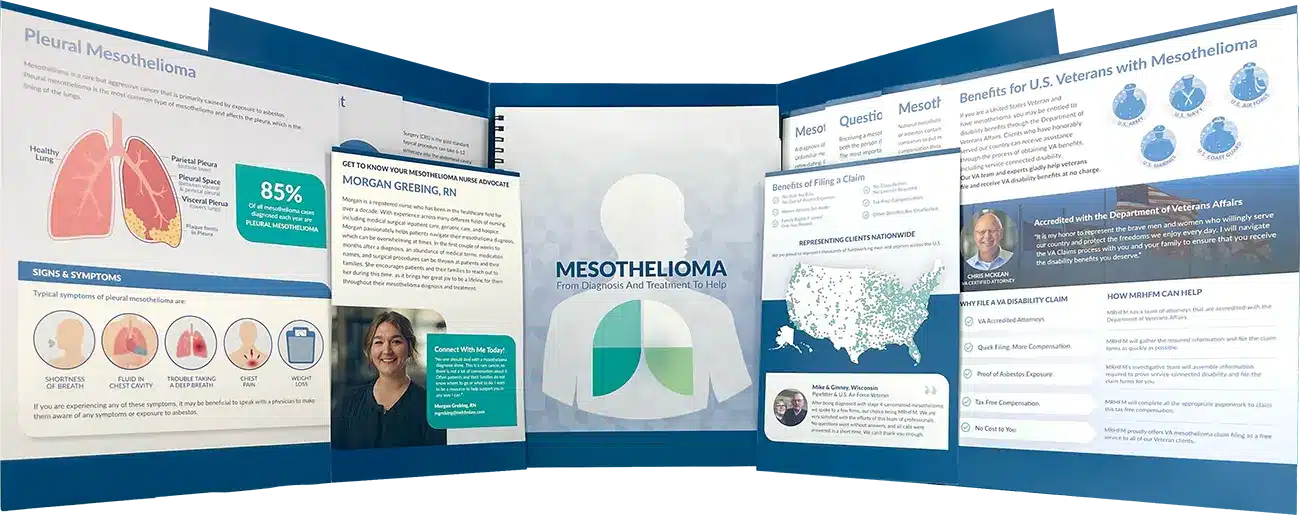
What you do now may significantly impact your outlook.
- What to Expect at Your Stage
- What Can Extend Life Expectancy
- Treatment Linked to Longer Life
- Patients Who Beat Their Prognosis
Answer 3 quick questions and we'll ship your free Mesothelioma Kit today:
Thank You!

We will send you your free guide shortly.
 Your information will be kept private
Your FREE Mesothelioma Care Kit Includes:
- 80-page guide to finding the best treatment, doctors, and care
- 100 answers to the most frequently asked questions
- 10 questions you MUST ask your doctor right away
- Best-selling cookbook: Cancer-Fighting Kitchen:
$32.50 - Award-winning book: Things I Wish I’d Known:
$19.95

The kit we received on mesothelioma is excellent and very well put together. We knew nothing about mesothelioma and this was the greatest resource we could get.

Hubert,
Pleural Mesothelioma
Patient in Massachusetts

Our Mesothelioma Care Kit provides the latest information on top treatment options and ways others have improved life expectancy.


Learn the numbers behind life expectancy estimates and find the best treatment options in your free Mesothelioma Care Kit.
Life-Extending Treatment Options
Surgery
Surgery an effective way to extend life expectancy. Mesothelioma patients have surgical options for both pleural and peritoneal mesothelioma. Even if your doctor says you aren’t eligible for surgical treatment, it’s highly recommended to get a second opinion from a mesothelioma specialist to confirm your treatment options.
There are two surgeries for patients with pleural mesothelioma: the extrapleural pneumonectomy (EPP) and the pleurectomy with decortication (P/D). One study reported that treatment with the EPP increased the overall survival rate of patients to about 27.5 months. The (P/D) —a less invasive procedure for patients with pleural mesothelioma — has produced results similar to the EPP, extending the survival rate of pleural mesothelioma patients to about 20 months. Both having patients who have significantly outlived their prognosis and life expectancy.
Cytoreductive surgery with heated intraperitoneal chemotherapy (HIPEC) is the most effective surgical option for peritoneal mesothelioma. There are reports of patients increasing their life expectancy to greater than 7 years with this treatment.
Multimodal Therapy
Combining two or more treatment options including surgery, chemotherapy, and radiation therapy, multimodal therapy is proven to improve the life expectancy of patients with mesothelioma regardless of location.
According to a few recent studies, pleural mesothelioma patients who had an EPP combined with chemotherapy and radiation therapy experienced a median survival rate ranging from 13 to 23.9 months. Those who had a multimodal therapy combining P/D with chemotherapy and radiation therapy resulted in an even better survival rate of 30 months with some patients significantly beating their initial prognosis.
Cytoreduction with HIPEC is also a form of multimodal treatment. It’s a combination of surgery to remove tumors in the abdomen and heated chemotherapy applied directly to the abdominal cavity, which kills microscopic cancer cells after the procedure.
Emerging Treatments
Developed and tested in clinical trials by medical researchers, emerging treatments find better ways to treat patients. Stage-three or stage-four mesothelioma patients that may not qualify for traditional treatments, like the EPP or a P/D, may benefit from emerging treatments including immunotherapy and photodynamic therapy.
Supporting Mesothelioma Patients, Family & Friends